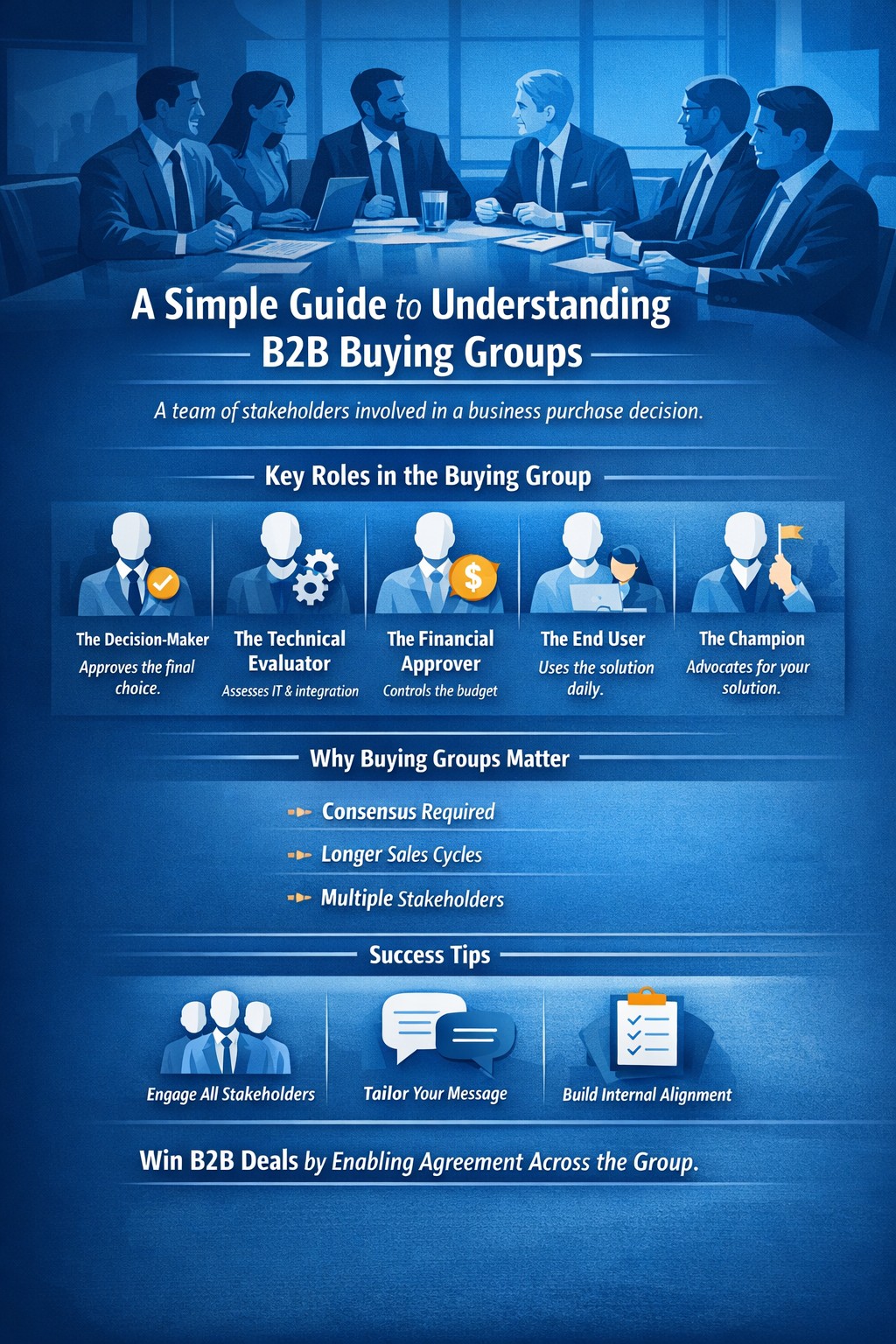
A Simple Guide to Understanding B2B Buying Groups
In today’s B2B world, purchasing decisions are rarely made by one person. Instead, most deals are evaluated and approved by a buying group—a team of stakeholders who collectively influence the final decision.
If you’re in B2B marketing or sales, understanding buying groups isn’t just helpful—it’s critical. Let’s break it down in simple terms.
What Is a B2B Buying Group?
A B2B buying group (also called a buying committee) is the collection of people involved in evaluating and approving a business purchase.
Unlike consumer purchases—where one person often decides—B2B decisions typically require input from multiple departments. The more complex or expensive the solution, the larger the buying group tends to be.
In many mid-market and enterprise deals, buying groups can include 5 to 10+ stakeholders.
Why Buying Groups Exist
Businesses don’t buy products impulsively. They buy solutions that impact:
• Revenue
• Operations
• Security
• Compliance
• Employee workflows
• Customer experience
Because these purchases affect multiple areas of the organization, different stakeholders must weigh in to reduce risk and ensure alignment.
Buying groups are about shared responsibility and risk mitigation.
Common Roles in a Buying Group
While every organization is different, most buying groups include some version of the following roles:
1. The Decision-Maker
Usually a senior executive (VP, Director, or C-level) who gives final approval.
They focus on strategy, ROI, and long-term impact.
2. The Technical Evaluator
Often from IT, engineering, or operations.
They assess integration, security, scalability, and feasibility.
3. The Financial Approver
Typically someone in finance or procurement.
They evaluate pricing, contract terms, and budget alignment.
4. The End User
The person (or team) who will actually use the product.
They care about usability, workflow impact, and day-to-day value.
5. The Champion
An internal advocate who supports your solution and pushes it forward internally.
Not every deal includes all five roles, but most include at least three or four.
How Buying Groups Change the Sales Process
Because multiple stakeholders are involved, B2B sales cycles are:
• Longer
• More complex
• More consensus-driven
Even if one person loves your solution, the deal can stall if others aren’t aligned.
This means success requires:
• Multi-threaded engagement (talking to more than one contact)
• Role-specific messaging
• Ongoing consensus-building
You’re not just selling a product—you’re helping a group reach agreement.
Why Buying Groups Matter for Marketing
Traditional lead generation focuses on individuals. But buying groups shift the focus from “Did we get a lead?” to “Have we engaged the full account?”
Modern B2B marketing strategies like Account-Based Marketing (ABM) prioritize:
• Reaching multiple stakeholders within a target account
• Delivering role-specific content
• Tracking engagement at the account level
The more members of a buying group you engage, the higher your chances of winning the deal.
Common Mistakes When Dealing with Buying Groups
Here are a few pitfalls to avoid:
1. Relying on One Contact
Even strong champions can lose influence if other stakeholders disagree.
2. Using the Same Messaging for Everyone
Executives and technical evaluators care about different things. Tailor accordingly.
3. Ignoring Procurement Until the End
Late-stage financial objections can derail deals if not addressed early.
4. Measuring Leads Instead of Account Engagement
One form fill doesn’t mean the buying group is ready.
How to Engage Buying Groups Effectively
Here are simple best practices:
• Identify key stakeholders early in the process
• Map out their priorities and concerns
• Provide tailored content for each role
• Support your champion with internal presentation materials
• Track engagement across the entire account
Think in terms of account progression, not just individual activity.
he Big Picture
B2B buying has evolved. Decisions are collaborative, cautious, and cross-functional. Understanding buying groups helps you align messaging, shorten sales cycles, and increase win rates.
In simple terms:
You don’t win B2B deals by convincing one person.
You win by enabling agreement across the group.
Once you shift your strategy from individual leads to buying group engagement, your entire go-to-market approach becomes more aligned with how modern B2B decisions actually happen.
Read More: https://intentamplify.com/blog..../what-is-a-buying-gr