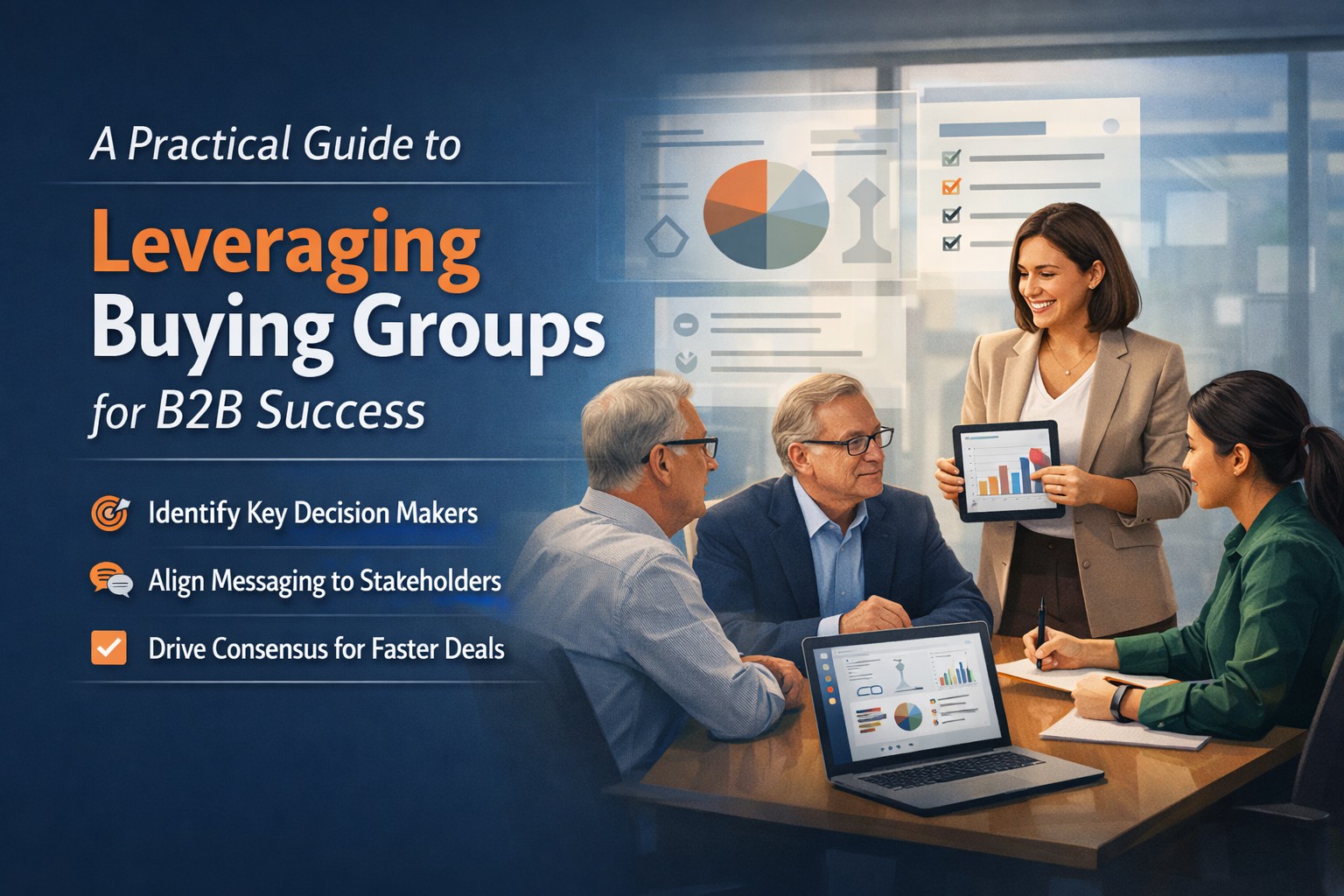
A Practical Guide to Leveraging Buying Groups for B2B Success
In modern B2B sales, deals are rarely won by convincing a single decision-maker. Instead, they’re influenced—and often slowed—by buying groups: cross-functional teams of stakeholders who collectively evaluate, approve, and implement solutions.
For B2B organizations, understanding and activating buying groups is no longer optional. It’s essential for shortening sales cycles, increasing win rates, and driving larger deal sizes.
Here’s a practical guide to leveraging buying groups strategically.
What Is a Buying Group?
A buying group (or buying committee) is the collection of stakeholders involved in a B2B purchase decision. Depending on deal size and complexity, this group may include:
Executive sponsors (C-suite or VP-level)Technical evaluators (IT, engineering)Financial approvers (finance, procurement)End users (operations, frontline teams)Influencers or champions
Each member has different priorities—and success depends on addressing them all.
Why Buying Groups Matter More Than Ever
Several factors have increased the importance of buying groups:
Higher deal complexityGreater budget scrutinyStronger focus on ROI and risk mitigationCross-departmental integration requirements
The result? Consensus is harder to achieve. Deals stall not because buyers aren’t interested—but because alignment hasn’t been built across stakeholders.
Organizations that understand buying group dynamics win more often.
Step 1: Identify the Full Buying Committee Early
One of the most common mistakes in B2B sales is engaging only one contact. Even strong champions can’t push deals forward alone.
Early in the sales cycle, ask:
Who will use this solution?Who approves the budget?Who manages implementation?Who could block this purchase?
Use CRM data, LinkedIn research, and account intelligence tools to map stakeholders.
The goal isn’t just more contacts—it’s complete coverage.
Step 2: Align Messaging to Each Role
Buying group members evaluate solutions differently.
For example:
Executives care about strategic impact and ROI.Technical leaders care about integration and security.Finance teams focus on cost structure and risk.End users want ease of use and workflow efficiency.
A single pitch deck rarely satisfies everyone. Develop role-based messaging and content tailored to specific concerns.
Personalization increases internal advocacy.
Step 3: Track Engagement at the Account Level
In traditional marketing, engagement is measured at the individual lead level. In buying group strategy, engagement must be tracked across the entire account.
Monitor:
How many stakeholders are interacting with content?Are multiple departments engaging?Is engagement increasing over time?
If only one stakeholder is active, consensus likely hasn’t formed yet.
Account-level engagement is a stronger predictor of deal progression than individual activity.
Step 4: Create Internal Enablement Assets for Champions
Your internal champion often needs help selling the solution internally.
Equip them with:
Business case templatesROI calculatorsCase studies relevant to their industryOne-page executive summariesSecurity and compliance documentation
The easier you make internal advocacy, the faster consensus builds.
Step 5: Orchestrate Multi-Threaded Outreach
Buying groups require multi-threaded engagement.
This means:
Marketing nurtures multiple roles simultaneously.Sales reaches out to various stakeholders with tailored messaging.ABM campaigns target the entire account, not just one contact.
When engagement spans the group, the solution becomes harder to ignore internally.
Step 6: Anticipate and Address Objections Early
Different stakeholders raise different objections.
Technical teams may worry about integration.
Finance may challenge cost.
Executives may question strategic alignment.
Proactively addressing these concerns reduces friction and prevents late-stage stalls.
Consensus-building starts before objections surface.
Step 7: Measure Success by Account Progression
If your metrics focus only on MQLs or demo bookings, you may miss buying group dynamics.
Track:
Stakeholder coverage rateCross-role engagementAccount-level intent signalsOpportunity progression velocityWin rates for multi-threaded accounts
Buying group penetration often correlates directly with revenue predictability.
Common Pitfalls to Avoid
Relying on a single championSending identical messaging to all rolesIgnoring procurement until the final stageOverlooking silent stakeholdersMeasuring leads instead of accounts
Winning modern B2B deals requires consensus, not persuasion.
Final Thoughts
Leveraging buying groups effectively transforms B2B sales from one-to-one selling into coordinated account engagement.
When marketing and sales align around buying group intelligence—identifying stakeholders, tailoring messaging, tracking engagement, and supporting internal advocacy—deals move faster and close more consistently.
In today’s B2B landscape, success isn’t about convincing one person.
It’s about enabling agreement across the group.
Read More: https://intentamplify.com/blog..../what-is-a-buying-gr