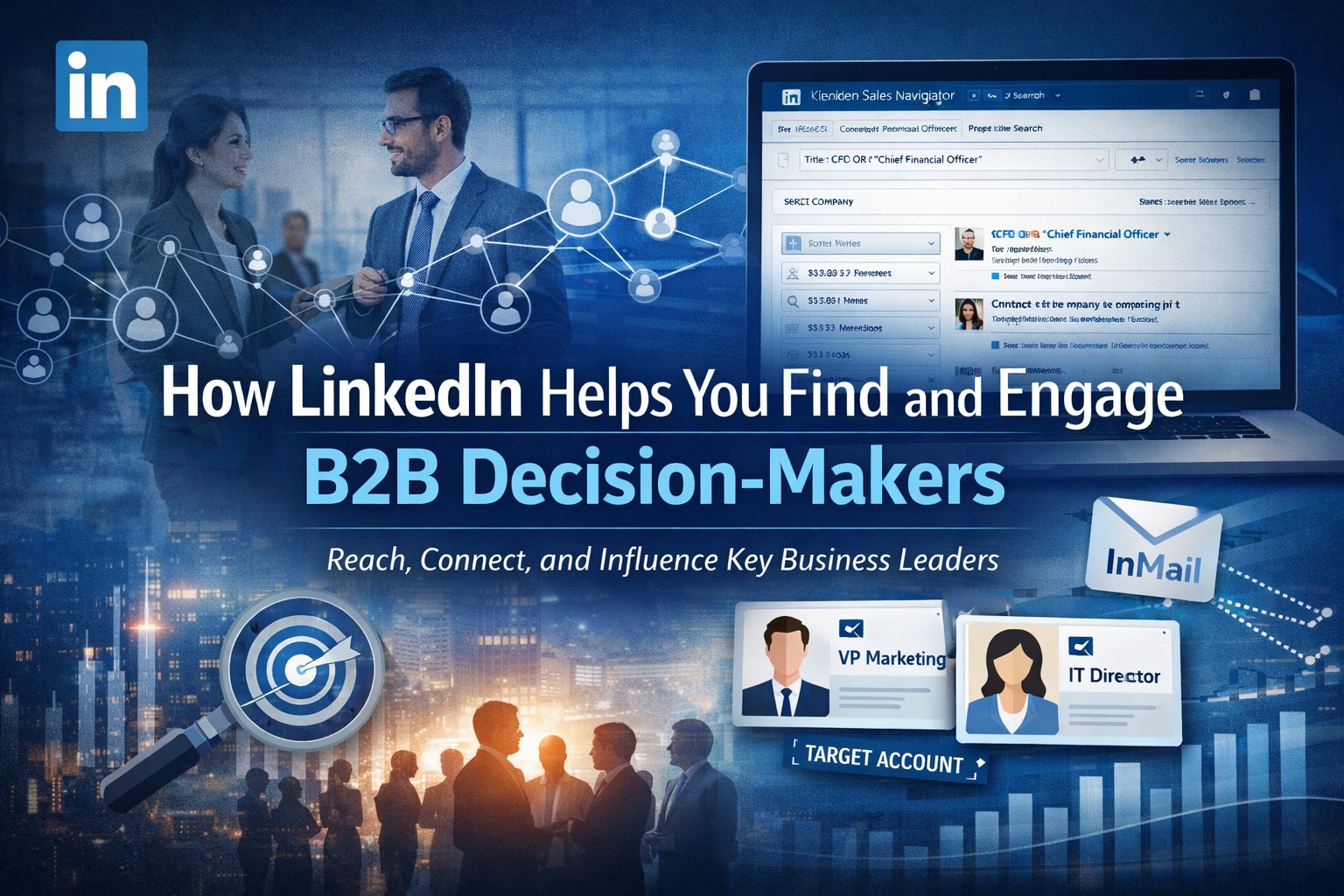
How LinkedIn Helps You Find and Engage B2B Decision-Makers
In B2B marketing, success often comes down to one critical factor: reaching the right decision-makers at the right time. Unlike most social platforms, LinkedIn is built specifically for professional networking—making it one of the most powerful channels for identifying, targeting, and engaging business leaders.
For companies focused on enterprise sales, account-based marketing (ABM), or high-value deals, LinkedIn isn’t just a social network—it’s a strategic growth platform.
Why LinkedIn Is Unique for B2B
LinkedIn stands apart because of its professional context. Users log in with their job titles, industries, company affiliations, and career interests clearly displayed. This structured data makes it easier to:
Identify job roles and seniority levels
Target specific industries or company sizes
Map buying committees within organizations
Understand professional interests and activity
For B2B marketers, that level of precision is invaluable.
1. Finding the Right Decision-Makers
LinkedIn offers multiple ways to locate decision-makers:
Advanced Search and Filtering
You can filter users by:
Job title (e.g., CFO, VP of Marketing, Head of IT)
Industry
Company size
Geography
Seniority level
This allows you to quickly narrow down prospects that match your Ideal Customer Profile (ICP).
Sales Navigator for Deeper Insights
LinkedIn Sales Navigator takes targeting further by enabling:
Boolean searches for complex role targeting
Account-level tracking
Alerts when prospects change jobs or post content
Relationship mapping across organizations
For ABM programs, this visibility into buying groups is a major advantage.
2. Engaging Decision-Makers Through Content
Finding decision-makers is only half the battle—engagement is what builds trust.
Thought Leadership Posts
Decision-makers are more likely to engage with insightful commentary, industry analysis, and practical advice than promotional content. Consistent thought leadership builds credibility over time.
Short, Insight-Dense Content
Posts that deliver quick value—frameworks, lessons learned, data insights—tend to perform well. LinkedIn rewards relevance and engagement rather than sheer volume.
Executive Visibility
Content shared by executives often outperforms brand pages. Leaders posting authentic insights create stronger engagement and trust among peers.
3. Paid Targeting for Precision Outreach
LinkedIn Ads allow you to target users with unmatched specificity. Campaigns can be filtered by:
Company name or industry
Job function and seniority
Skills and interests
Group membership
This makes LinkedIn ideal for:
Promoting webinars or gated content
Running ABM campaigns
Retargeting engaged users
Launching new product announcements
While LinkedIn ads are often more expensive than other platforms, the precision and B2B alignment frequently justify the cost.
4. Account-Based Marketing (ABM) on LinkedIn
LinkedIn is particularly powerful for ABM strategies. You can:
Upload target account lists
Serve personalized ads to specific companies
Encourage sales teams to engage prospects directly
Monitor engagement at the account level
When marketing and sales collaborate on LinkedIn, outreach becomes warmer and more contextual.
5. Building Relationships, Not Just Pipelines
One of LinkedIn’s strongest advantages is its ability to support long sales cycles. B2B deals often take months, and consistent visibility keeps your brand top of mind.
By:
Commenting thoughtfully on prospects’ posts
Sharing relevant industry updates
Engaging in conversations rather than cold pitching
You build familiarity and trust long before formal sales discussions begin.
6. Leveraging Social Proof
Decision-makers pay attention to peer validation. On LinkedIn, this can include:
Mutual connections
Client testimonials and recommendations
Shared events and group memberships
Engagement from respected industry voices
This social proof reinforces credibility in a way cold outreach alone cannot.
7. Data-Driven Optimization
LinkedIn provides analytics that help marketers refine targeting and messaging. You can track:
Engagement rates
Lead generation performance
Audience demographics
Conversion trends
These insights allow for continuous optimization—ensuring campaigns reach the most relevant decision-makers.
Common Mistakes to Avoid
Even with powerful tools, some B2B teams misuse LinkedIn by:
Overly aggressive direct messaging
Posting only promotional content
Ignoring engagement opportunities
Treating it as a lead list rather than a relationship platform
Success on LinkedIn requires patience and authenticity.
Final Thoughts
LinkedIn helps B2B companies find and engage decision-makers by combining professional data, advanced targeting, and relationship-driven engagement in one platform.
It’s not just about generating leads—it’s about building influence, credibility, and trust among the people who make buying decisions.
For organizations willing to invest in consistent thought leadership, strategic outreach, and precise targeting, LinkedIn remains one of the most effective channels for connecting with high-value B2B audiences.
Read More: https://intentamplify.com/blog..../the-role-of-linkedi