How an FAQ Section Can Boost Your SEO and User Engagement
An FAQ (Frequently Asked Questions) section might seem like a simple addition to your website—but when done strategically, it can become one of your most powerful SEO and engagement tools. In today’s search-driven digital landscape, users want fast, clear answers. Search engines want structured, relevant content. A well-crafted FAQ section satisfies both.
Here’s how.
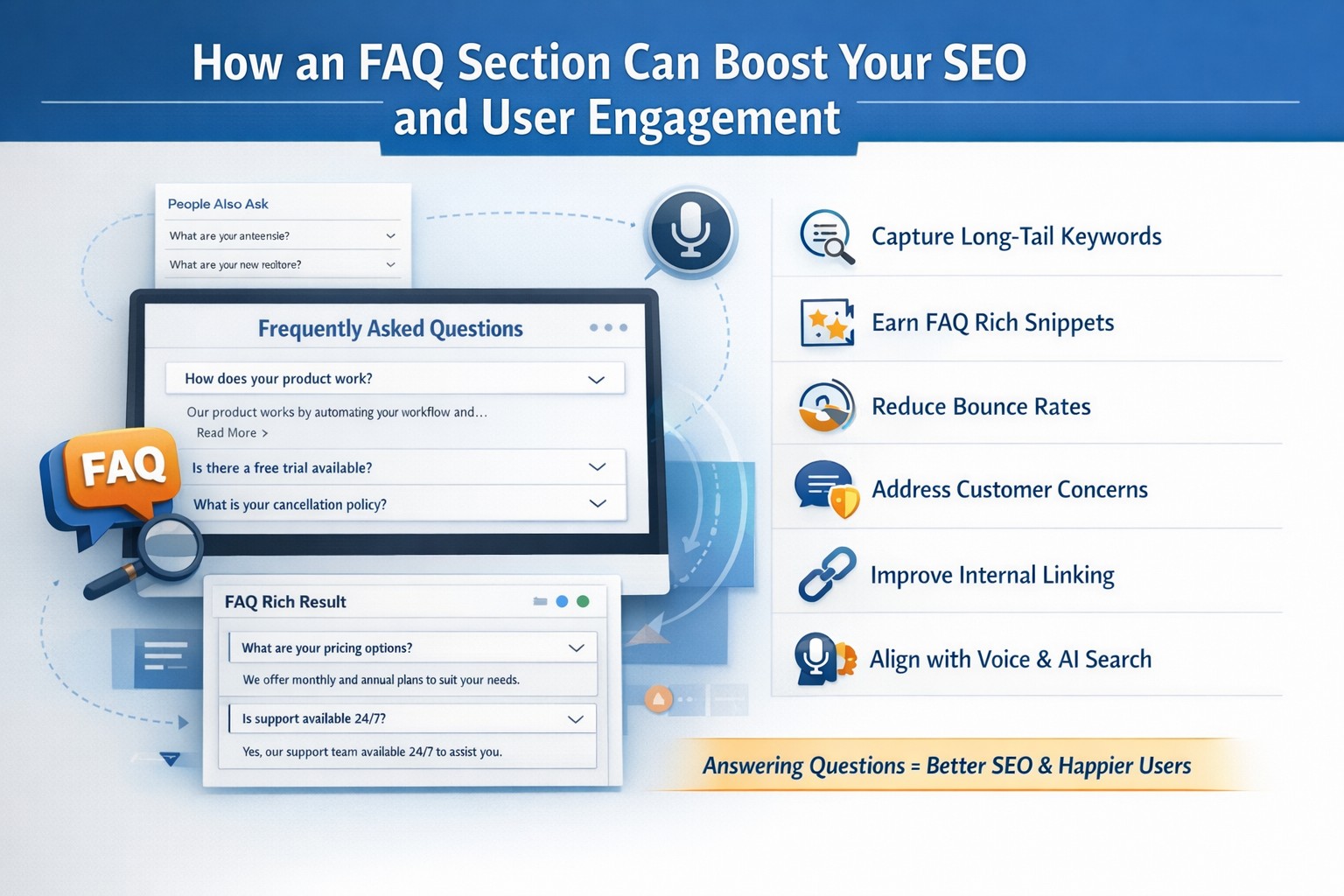
1. Captures Long-Tail Search Traffic
Many user searches are phrased as questions:
“How does [product] work?”
“Is [service] secure?”
“What does pricing include?”
“Do you offer support in [region]?”
An FAQ section allows you to directly target these long-tail keywords—search queries that are specific, high-intent, and often less competitive than broad keywords.
Because FAQ content mirrors how people naturally search, it increases your chances of ranking for question-based queries and voice searches.
2. Improves Featured Snippet and Rich Result Opportunities
Search engines often pull concise answers from FAQ sections to display in:
Featured snippets
“People Also Ask” boxes
FAQ-rich search results
By structuring your questions clearly and providing concise, direct answers, you improve your chances of earning enhanced visibility in search results.
When combined with FAQ schema markup (structured data), your content becomes even more accessible to search engines, increasing the likelihood of rich results that boost click-through rates.
3. Reduces Bounce Rates and Increases Time on Page
Users frequently leave websites because they can’t find quick answers. An FAQ section addresses common concerns upfront, helping visitors get clarity without digging through multiple pages.
Benefits include:
Lower bounce rates
Increased dwell time
Higher engagement with related content
Greater likelihood of conversion
When users feel informed, they’re more likely to explore further instead of returning to search results.
4. Supports Conversion by Addressing Objections
From a marketing perspective, FAQs are more than informational—they’re strategic. A strong FAQ section anticipates buyer concerns and reduces friction before a sales conversation even begins.
Common objection-handling FAQs include:
Security and compliance details
Pricing transparency
Implementation timelines
Integration capabilities
Customer support availability
By proactively answering these questions, you remove uncertainty and build trust—two critical drivers of conversion.
5. Strengthens Internal Linking and Site Architecture
An FAQ section creates opportunities for smart internal linking. You can link each answer to:
Detailed blog posts
Product pages
Case studies
Support documentation
This improves site structure, distributes link equity, and helps search engines better understand your content ecosystem.
The result is stronger overall SEO performance—not just improved FAQ rankings.
6. Aligns With Voice Search and AI Search Behavior
As voice search and AI-powered search assistants grow, users increasingly phrase queries conversationally. FAQ sections naturally align with this format because they’re structured around direct questions and answers.
Clear, conversational answers increase your chances of being surfaced by:
Voice assistants
AI-powered search summaries
Conversational search engines
In a world where search behavior is evolving, FAQ content is inherently future-ready.
7. Improves User Experience (UX)
Search engines prioritize websites that offer a strong user experience. An FAQ section contributes to UX by:
Reducing friction
Improving navigation
Providing clarity
Shortening the path to action
When visitors can quickly resolve doubts, they feel more confident interacting with your brand.
8. Provides Insight Into Customer Intent
Your FAQ section should be driven by real user questions—not guesses. Sources for effective FAQ topics include:
Sales call transcripts
Support tickets
On-site search queries
Customer interviews
Live chat interactions
By analyzing what people ask most often, you align content directly with real buyer intent—improving both SEO performance and relevance.
Best Practices for SEO-Optimized FAQs
To maximize impact:
Use clear, keyword-informed question phrasing
Keep answers concise but informative
Avoid duplicate content across pages
Implement FAQ schema markup
Update FAQs regularly based on new trends or concerns
Group related questions logically
Remember: quality matters more than quantity. A focused, relevant FAQ section outperforms a long list of generic questions.
Final Thoughts
An FAQ section is more than a support feature—it’s a strategic SEO asset and engagement tool. By targeting long-tail keywords, improving search visibility, reducing friction, and building trust, FAQs help bridge the gap between search intent and conversion.
In a digital environment where users expect instant clarity, the brands that answer questions best are the brands that win.
Read More: https://intentamplify.com/blog..../why-having-an-faq-s