What the Grammarly-to-Superhuman Shift Says About the Future of AI in Productivity
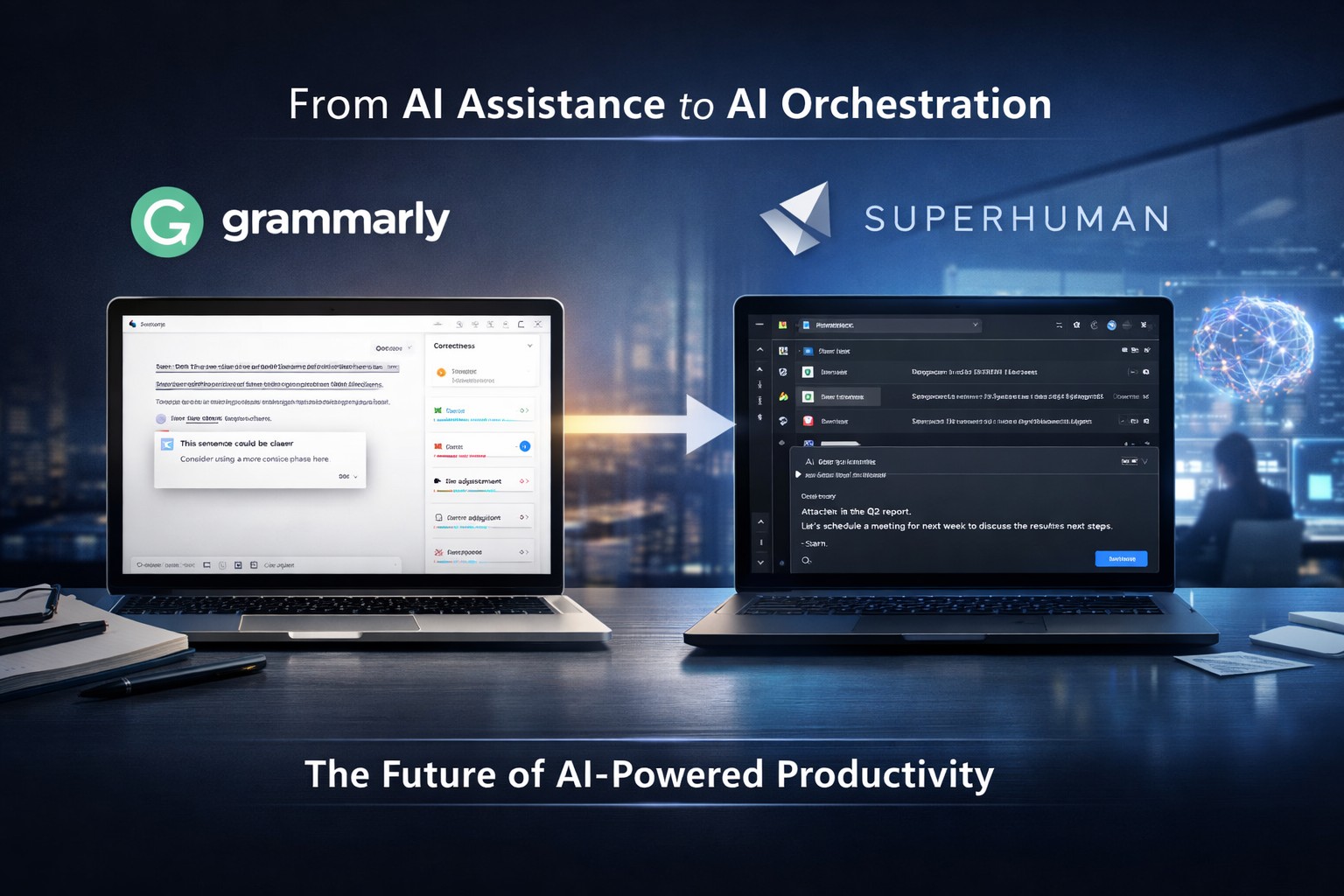
The evolution from tools like Grammarly to platforms like Superhuman reflects more than a change in product category. It highlights a deeper transformation in how AI is shaping productivity.
Grammarly popularized AI as a layer of assistance—correcting grammar, improving tone, and refining written communication. Superhuman, by contrast, represents AI as an operational engine—prioritizing, triaging, summarizing, and streamlining entire workflows. Together, they signal a broader shift in how AI is moving from enhancement to orchestration.
From Micro-Improvement to Workflow Reinvention
Grammarly focused on improving a specific task: writing. It operated at the sentence and paragraph level, helping users communicate more clearly and confidently. The AI functioned as a co-editor.
The newer wave of tools, exemplified by Superhuman, operates at the workflow level. Instead of improving a single action, they aim to:
Reduce the number of decisions users need to make
Automatically surface what matters most
Eliminate unnecessary tasks entirely
The future of AI productivity isn’t just about making tasks better—it’s about questioning whether those tasks need to exist at all.
AI Moves from Correction to Coordination
Early AI productivity tools corrected mistakes and offered suggestions. The next generation coordinates actions across systems.
This means:
Prioritizing messages before users open their inbox
Drafting responses based on context and history
Predicting what requires attention without being asked
AI is evolving from reactive support to proactive management. It no longer waits for user input; it anticipates needs.
The Shift from Feature to Foundation
Grammarly introduced AI as a distinct feature—clearly visible and intentionally invoked. Today’s AI-native tools embed intelligence more deeply. In platforms like Superhuman, AI becomes part of the core experience rather than a separate capability.
This reflects a broader market expectation: AI is no longer a differentiator by itself. It is assumed. What matters is how seamlessly it integrates into the workflow.
Productivity Becomes About Cognitive Load
Traditional productivity tools emphasized speed—faster typing, faster search, faster navigation. The new AI era focuses on reducing cognitive load.
Users don’t just want to work faster; they want to:
Think less about routine decisions
Spend less time switching contexts
Avoid mental fatigue from constant triage
AI-powered tools that minimize mental overhead will define the next phase of productivity software.
From Personal Enhancement to Operational Leverage
Grammarly enhanced individual performance. Superhuman and similar tools aim to create leverage across entire workstreams.
The implications are significant:
Productivity gains compound when AI influences prioritization
Team coordination improves when context is shared intelligently
Decision-making accelerates when information is surfaced proactively
AI’s role expands from helping individuals do better work to helping organizations operate more fluidly.
AI-Native Design Signals Market Maturity
Another insight from this shift is design philosophy. AI-native tools emphasize simplicity and clarity, not feature overload. They assume intelligence in the background and reduce visible complexity.
The future of productivity tools will likely favor:
Minimal interfaces with intelligent defaults
Transparent reasoning behind AI recommendations
Quiet automation that feels natural rather than intrusive
As AI matures, trust and subtlety become competitive advantages.
The Human Role Doesn’t Disappear
Despite increasing automation, human judgment remains central. AI may draft, prioritize, and suggest—but people still decide, interpret nuance, and build relationships.
The most successful productivity tools:
Augment human capability
Preserve user control
Enhance clarity rather than replace thinking
The goal is amplification, not automation for its own sake.
What This Shift Ultimately Signals
The movement from Grammarly-style enhancement to Superhuman-style orchestration signals a larger truth: AI in productivity is moving from assistance to infrastructure.
Future productivity platforms will:
Anticipate tasks before they are assigned
Reduce the number of manual steps in complex workflows
Focus on outcomes rather than activity
In this landscape, productivity is no longer measured by how much work gets done—but by how much friction is removed.
Final Thoughts
The Grammarly-to-Superhuman shift illustrates the evolution of AI in the workplace. It marks the transition from incremental improvement to systemic transformation.
As AI becomes embedded in the fabric of daily work, the most impactful tools won’t simply help users write better sentences. They’ll help them make better decisions, focus on what matters, and eliminate unnecessary work altogether.
That is the real future of AI-powered productivity.
Read More: https://intentamplify.com/blog..../grammarly-becoming-