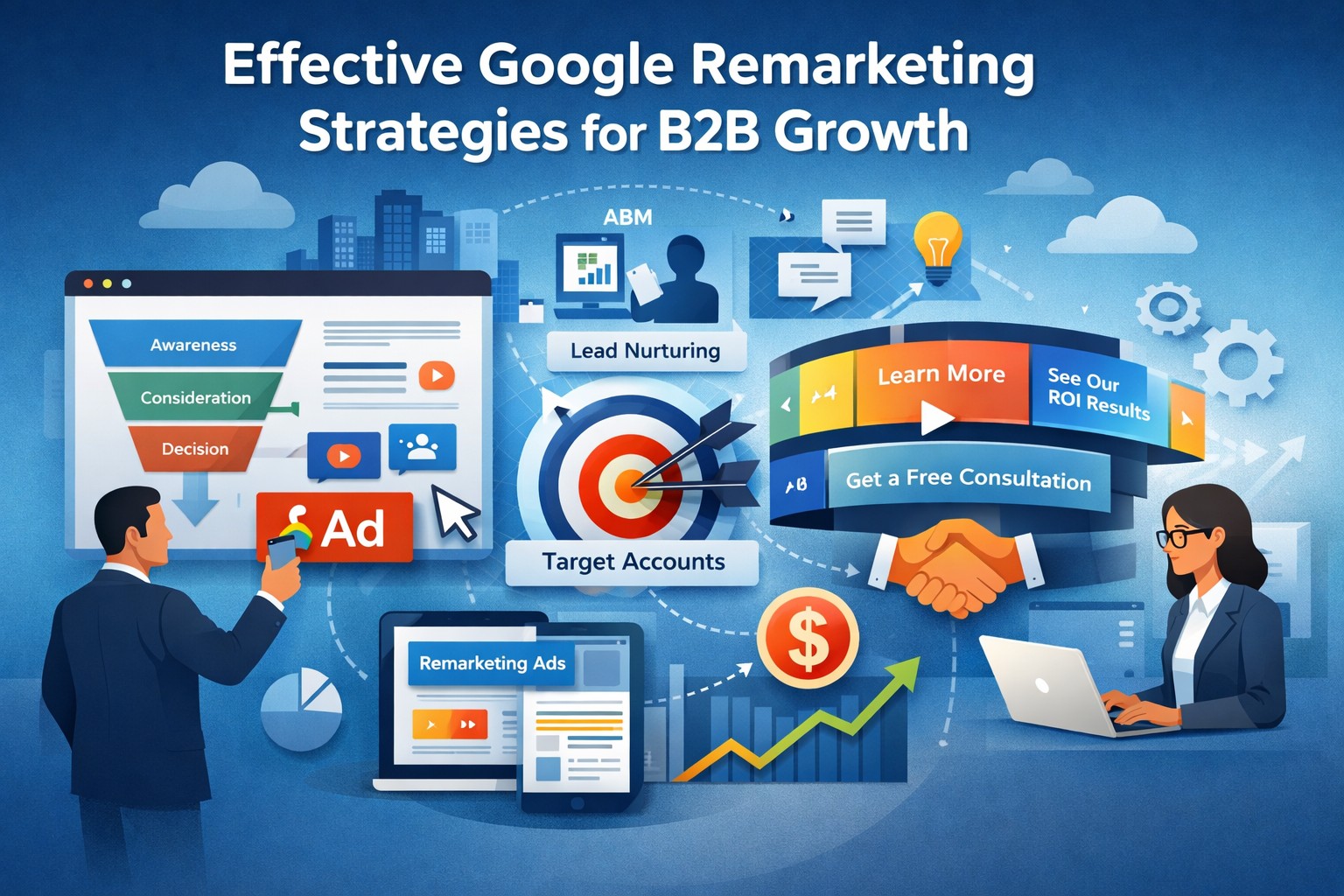
Effective Google Remarketing Strategies for B2B Growth
In B2B marketing, very few prospects convert on their first visit. Buying cycles are longer, decisions involve multiple stakeholders, and research often happens over weeks—or months. That’s why Google remarketing (retargeting) remains one of the most powerful growth levers for B2B companies.
When executed strategically, remarketing doesn’t just increase brand visibility—it accelerates deal velocity, improves lead quality, and drives measurable pipeline growth.
Why Remarketing Matters More in B2B
B2B buyers are deliberate. They compare vendors, read content, consult internal teams, and revisit websites multiple times before taking action.
Without remarketing:
Warm prospects go cold
Competitors stay top of mind
High-intent traffic is wasted
Remarketing keeps your brand visible throughout the evaluation process, ensuring you remain part of the consideration set.
Segment Audiences by Intent Level
The most common B2B remarketing mistake is treating all visitors the same. Effective strategies segment audiences based on behavior and engagement depth.
Examples of high-performing segments include:
Visitors who viewed pricing or demo pages
Visitors who consumed specific solution content
Event or webinar attendees
Repeat visitors within a short timeframe
By tailoring messaging to engagement level, remarketing becomes more relevant—and more effective.
Align Messaging to Buying Stage
B2B remarketing works best when ads reflect where the buyer is in their journey.
For example:
Early-stage visitors may see educational content or industry insights
Mid-stage prospects may receive case studies or comparison guides
Late-stage visitors may see demo offers or consultation calls
This staged approach reinforces trust and guides prospects forward rather than pushing too hard too soon.
Use Account-Based Remarketing for High-Value Targets
In high-value B2B markets, account-based remarketing can amplify outbound and sales efforts.
By combining first-party data and targeted ad strategies, companies can:
Reinforce messaging to specific companies already in pipeline
Support sales outreach with brand visibility
Influence multiple stakeholders within the same account
This coordinated approach increases engagement across buying committees.
Optimize Frequency Without Creating Fatigue
Remarketing is powerful—but overexposure can hurt brand perception. In B2B, where buyers value professionalism, frequency management is essential.
Best practices include:
Setting frequency caps
Rotating creative regularly
Testing messaging variations
Excluding converted users from active campaigns
The goal is visibility, not annoyance.
Leverage Sequential Storytelling
Rather than repeating the same ad, effective B2B remarketing uses sequential messaging. This means prospects see a logical progression of messages over time.
For example:
Awareness-focused value proposition
Proof-driven case study
ROI or differentiation messaging
Direct call-to-action
Sequential remarketing reinforces credibility and gradually builds momentum toward conversion.
Combine Remarketing with Sales Signals
Remarketing becomes even more powerful when aligned with real-time sales signals.
For example:
Increase bid intensity for accounts showing buying intent
Trigger remarketing campaigns when a prospect downloads gated content
Support active opportunities with tailored messaging
This alignment between paid media and sales increases efficiency and conversion rates.
Measure Pipeline, Not Just Clicks
B2B remarketing success shouldn’t be measured solely by CTR or impressions. Instead, focus on metrics tied to growth:
Assisted conversions
Lead-to-opportunity rates
Opportunity acceleration
Cost per qualified pipeline
Remarketing often plays a supporting role in longer sales cycles—so its impact may appear downstream.
Creative That Reflects Professional Buyers
B2B remarketing creative should reflect the sophistication of the audience. Avoid overly generic or consumer-style messaging.
Effective B2B creative:
Focuses on outcomes and business impact
Highlights proof points and credibility
Maintains brand consistency
Speaks directly to professional priorities
Strong creative reinforces trust rather than chasing clicks.
Final Thoughts
Google remarketing is not just a reminder tactic—it’s a strategic growth engine for B2B organizations. When segmented by intent, aligned with buying stages, and integrated with sales efforts, remarketing strengthens pipeline performance and improves conversion efficiency.
In complex B2B journeys, visibility equals influence. And influence—applied consistently and intelligently—drives sustainable growth.
Read More: https://intentamplify.com/blog..../google-remarketing-