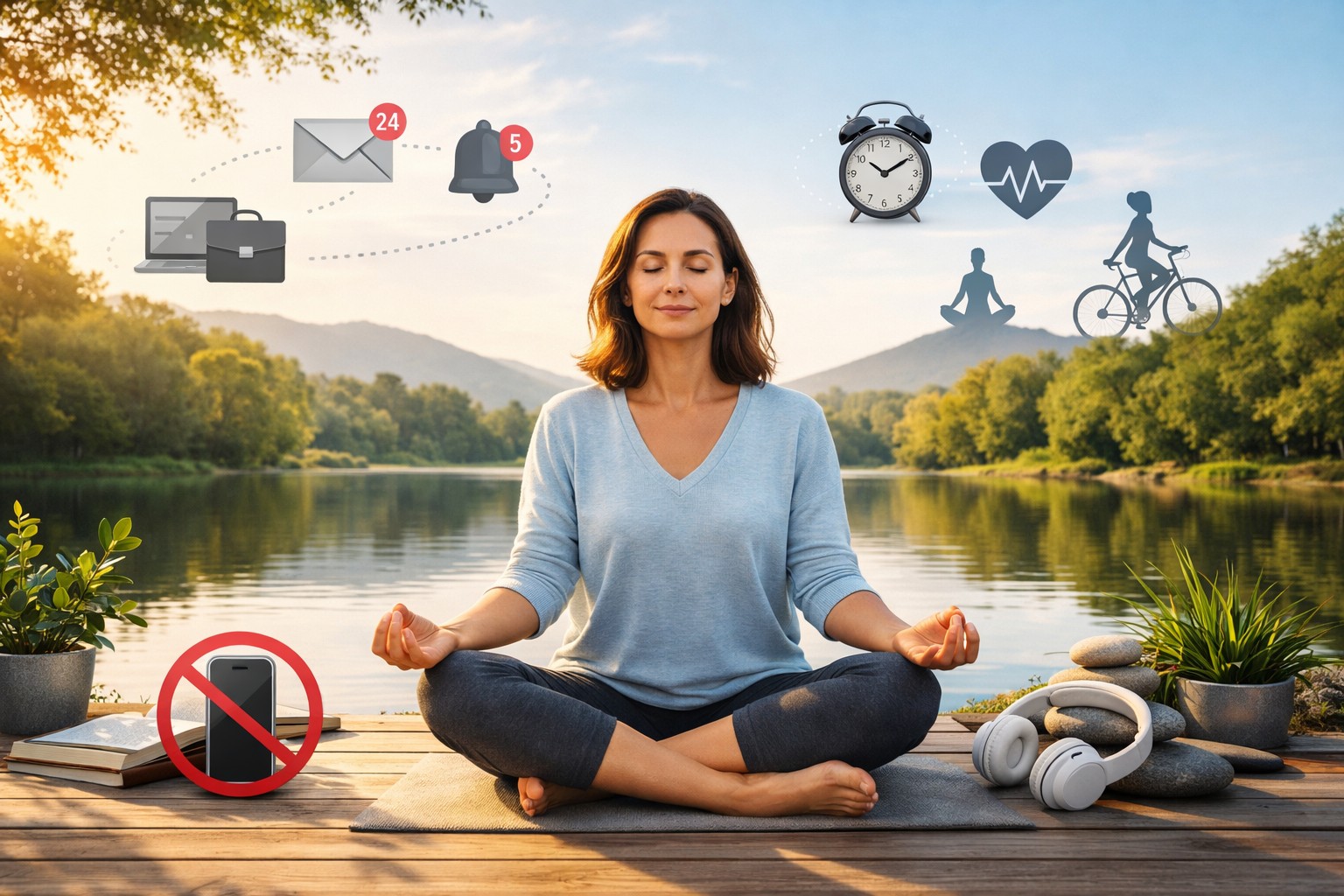
How to Reclaim Well-Being in an Increasingly Tech-Driven World
Technology has made our lives faster, more connected, and more efficient. But it has also made them louder, more demanding, and harder to escape. Notifications blur the boundary between work and rest. Social feeds compete for attention. Even relaxation is mediated through screens.
Reclaiming well-being in a tech-driven world doesn’t require abandoning technology. It requires rethinking how we relate to it—shifting from reactive consumption to intentional use.
Here’s how to do it.
Recognize the Hidden Cost of Constant Connectivity
Modern technology is designed for engagement. Endless scrolling, real-time updates, and algorithmic personalization keep us connected—but often at the cost of focus and mental clarity.
Common signs of tech overload include:
Difficulty concentrating without multitasking
Compulsive checking of devices
Mental fatigue despite low physical activity
Reduced quality of sleep
The first step toward reclaiming well-being is awareness. Notice how technology affects your energy, mood, and attention throughout the day.
Redefine Productivity
In tech-driven environments, productivity is often measured by responsiveness. Fast replies and constant availability can feel like success—but they often erode deep focus and recovery time.
Reclaiming well-being means redefining productivity as:
Meaningful progress, not constant activity
Focused work, not fragmented multitasking
Sustainable output, not burnout cycles
Technology should support outcomes—not demand perpetual attention.
Create Boundaries Around Digital Time
Boundaries are essential in a world where work and social life live in the same device.
Consider:
Setting device-free times (e.g., the first and last hour of the day)
Turning off non-essential notifications
Using separate devices or profiles for work and personal use
Scheduling intentional offline time
Boundaries don’t reduce productivity—they protect it by restoring focus and energy.
Practice Mindful Technology Use
Mindfulness doesn’t require meditation retreats. It can begin with simple habits:
Before opening an app, ask: Why am I doing this?
Avoid switching between multiple apps without purpose
Complete one task before starting another
Notice emotional reactions triggered by online content
Small shifts in awareness reduce impulsive behavior and restore a sense of control.
Protect Sleep at All Costs
One of the biggest casualties of a tech-driven lifestyle is sleep. Blue light exposure, late-night scrolling, and work emails disrupt recovery and mental clarity.
To protect sleep:
Establish a digital curfew
Keep devices out of the bedroom when possible
Replace late-night screen time with calming routines
Avoid work communication close to bedtime
Quality sleep amplifies every other well-being strategy.
Reconnect with Physical and Offline Experiences
Technology tends to pull attention inward and onto screens. Reclaiming well-being requires rebalancing toward physical presence.
Simple practices include:
Daily walks without devices
In-person conversations without screen interruptions
Creative hobbies that involve hands-on engagement
Time spent in nature
Offline experiences recalibrate attention and reduce cognitive overload.
Design Technology to Serve You
Not all tech use is harmful. In fact, technology can enhance well-being when used intentionally.
Use tools that:
Track and limit screen time
Support focus (e.g., distraction blockers)
Encourage healthy habits
Facilitate meaningful connection rather than passive consumption
The goal isn’t elimination—it’s alignment.
Accept That Balance Is Ongoing
Reclaiming well-being isn’t a one-time reset. It’s an ongoing process of adjusting habits as technology evolves.
Some days will feel balanced; others won’t. What matters is the willingness to recalibrate when digital life starts to feel overwhelming.
Final Thoughts
We live in a world where technology is woven into nearly every aspect of daily life. Reclaiming well-being doesn’t mean stepping away from modern tools—it means stepping into intentional use.
By setting boundaries, redefining productivity, protecting sleep, and prioritizing presence, you can transform technology from a source of stress into a tool that genuinely supports your life.
In an increasingly connected world, well-being isn’t found by disconnecting completely—it’s found by choosing connection on your own terms.
About US:
AI Technology Insights (AITin) is the fastest-growing global community of thought leaders, influencers, and researchers specializing in AI, Big Data, Analytics, Robotics, Cloud Computing, and related technologies. Through its platform, AITin offers valuable insights from industry executives and pioneers who share their journeys, expertise, success stories, and strategies for building profitable, forward-thinking businesses
Read More: https://technologyaiinsights.c....om/arianna-huffingto