What the Rise of AI-Powered CMOs Means for Marketing Leadership
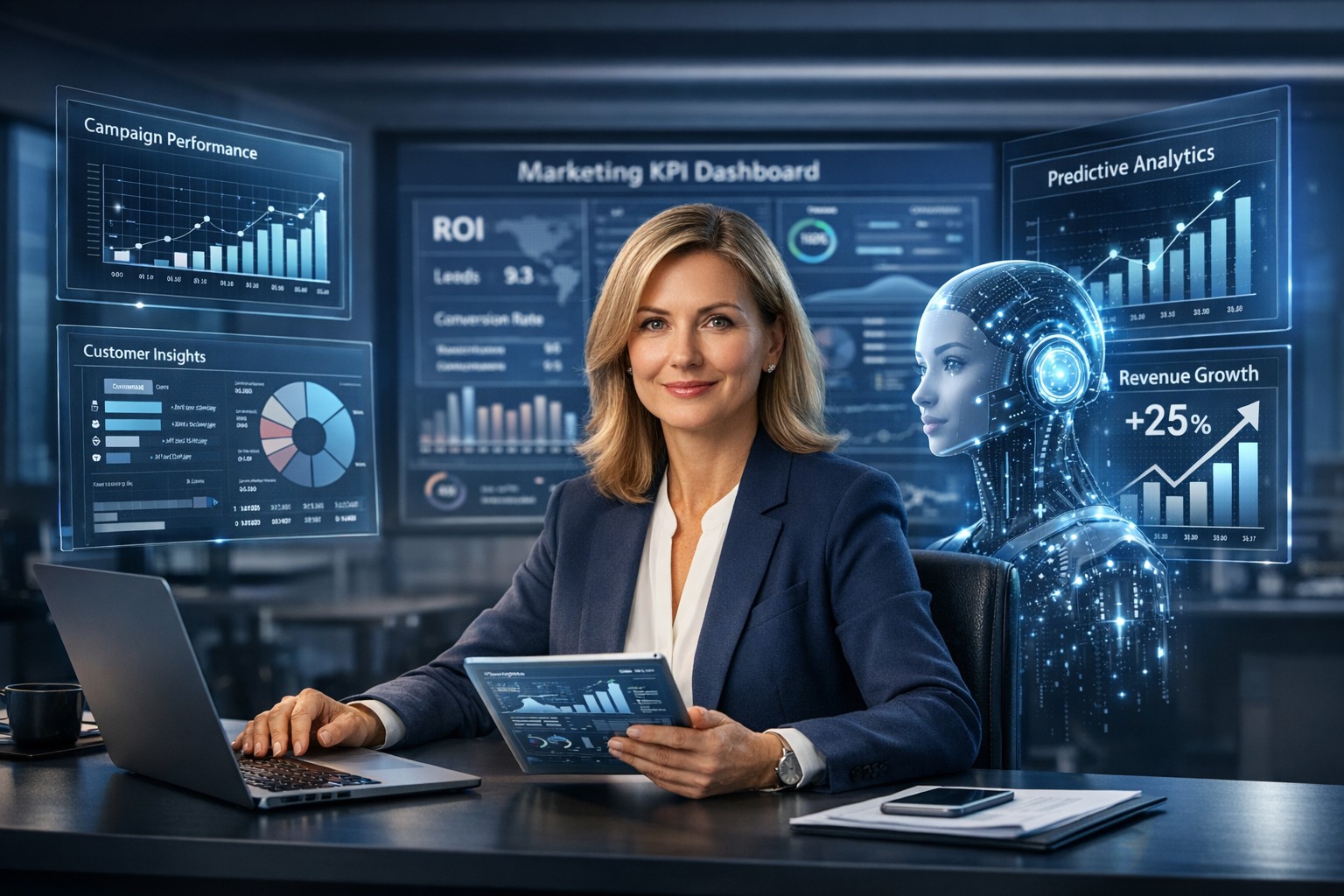
The role of the Chief Marketing Officer has always evolved alongside technology. From digital transformation to data-driven marketing, each wave reshaped what marketing leadership looked like. In 2025, we’re witnessing another shift: the rise of the AI-powered CMO.
This doesn’t mean AI is replacing marketing leaders. It means the most effective CMOs are deeply integrating AI into decision-making, execution, and strategy—transforming how marketing operates at every level.
From Intuition-Driven to Intelligence-Augmented
Traditionally, CMOs balanced creative instinct with performance data. While analytics have long informed strategy, AI now elevates decision-making by uncovering patterns and opportunities humans alone might miss.
AI-powered CMOs rely on systems that:
Surface real-time performance insights
Predict campaign outcomes before launch
Identify shifting buyer behaviors
Recommend resource allocation adjustments
This doesn’t eliminate intuition—it strengthens it with data-backed clarity.
Faster Strategic Adjustments
Marketing cycles have compressed. Trends move faster, channels evolve constantly, and buyer expectations shift quickly. AI gives CMOs the ability to adapt strategy in near real time.
Instead of waiting for quarterly reviews, AI-powered leaders can:
Detect underperforming campaigns early
Optimize budget allocation dynamically
Test and refine messaging continuously
Respond proactively to market signals
Speed becomes a leadership advantage.
A Shift from Campaign Management to Revenue Leadership
Modern CMOs are increasingly measured by revenue impact, not brand metrics alone. AI helps marketing leaders connect activity directly to pipeline, customer acquisition, and lifetime value.
With AI-driven analytics, CMOs gain visibility into:
Which channels drive the highest-quality leads
Which segments convert fastest
How marketing influences retention and expansion
This strengthens marketing’s seat at the executive table—aligning it more closely with sales and revenue operations.
Orchestrating Marketing at Scale
As organizations expand globally and across channels, complexity increases. AI-powered CMOs leverage automation and orchestration tools to coordinate messaging, timing, and personalization at scale.
AI supports:
Cross-channel journey orchestration
Dynamic audience segmentation
Real-time personalization across markets
Consistent brand messaging with local adaptation
Leadership becomes less about managing individual campaigns and more about designing intelligent systems.
Redefining Team Structures and Skills
The rise of AI-powered marketing also reshapes team dynamics. CMOs now need teams that blend creativity, data literacy, and technical fluency.
Marketing leadership increasingly prioritizes:
AI fluency across roles
Cross-functional collaboration with data and IT teams
Continuous experimentation and optimization
Governance and responsible AI practices
The modern CMO becomes both a creative leader and a technology strategist.
Balancing Automation with Human Brand Voice
While AI can generate content, optimize campaigns, and analyze performance, brand authenticity remains critical. AI-powered CMOs understand that automation must support—not dilute—brand identity.
Effective leaders ensure:
Human oversight on sensitive messaging
Clear brand guidelines guiding AI outputs
Transparency around AI-assisted content
Trust remains the foundation of effective marketing leadership.
Ethical and Governance Responsibilities Expand
As AI influences more marketing decisions, CMOs inherit greater responsibility around privacy, transparency, and compliance.
AI-powered CMOs must:
Safeguard customer data
Ensure fair and unbiased targeting
Align AI usage with regulatory standards
Maintain consumer trust
Leadership in 2025 includes ethical stewardship of AI capabilities.
From Operator to Architect
Perhaps the biggest shift is conceptual. The AI-powered CMO becomes less of a campaign operator and more of a system architect—designing frameworks that allow marketing to operate intelligently and continuously.
This includes:
Selecting and integrating AI tools
Defining data strategies
Building scalable automation models
Creating feedback loops for constant improvement
Marketing becomes a dynamic, AI-enhanced engine rather than a series of discrete initiatives.
Final Thoughts
The rise of AI-powered CMOs signals a broader transformation in marketing leadership. AI is not replacing creativity or strategic thinking—it’s amplifying them.
In 2025, the most effective marketing leaders are those who embrace AI as a partner in insight, execution, and growth. They move faster, make smarter decisions, and align marketing more closely with revenue outcomes.
The future of marketing leadership belongs to those who can blend human creativity with machine intelligence—strategically, responsibly, and confidently.
About US:
AI Technology Insights (AITin) is the fastest-growing global community of thought leaders, influencers, and researchers specializing in AI, Big Data, Analytics, Robotics, Cloud Computing, and related technologies. Through its platform, AITin offers valuable insights from industry executives and pioneers who share their journeys, expertise, success stories, and strategies for building profitable, forward-thinking businesses
Read More: https://technologyaiinsights.c....om/series-unveils-ai