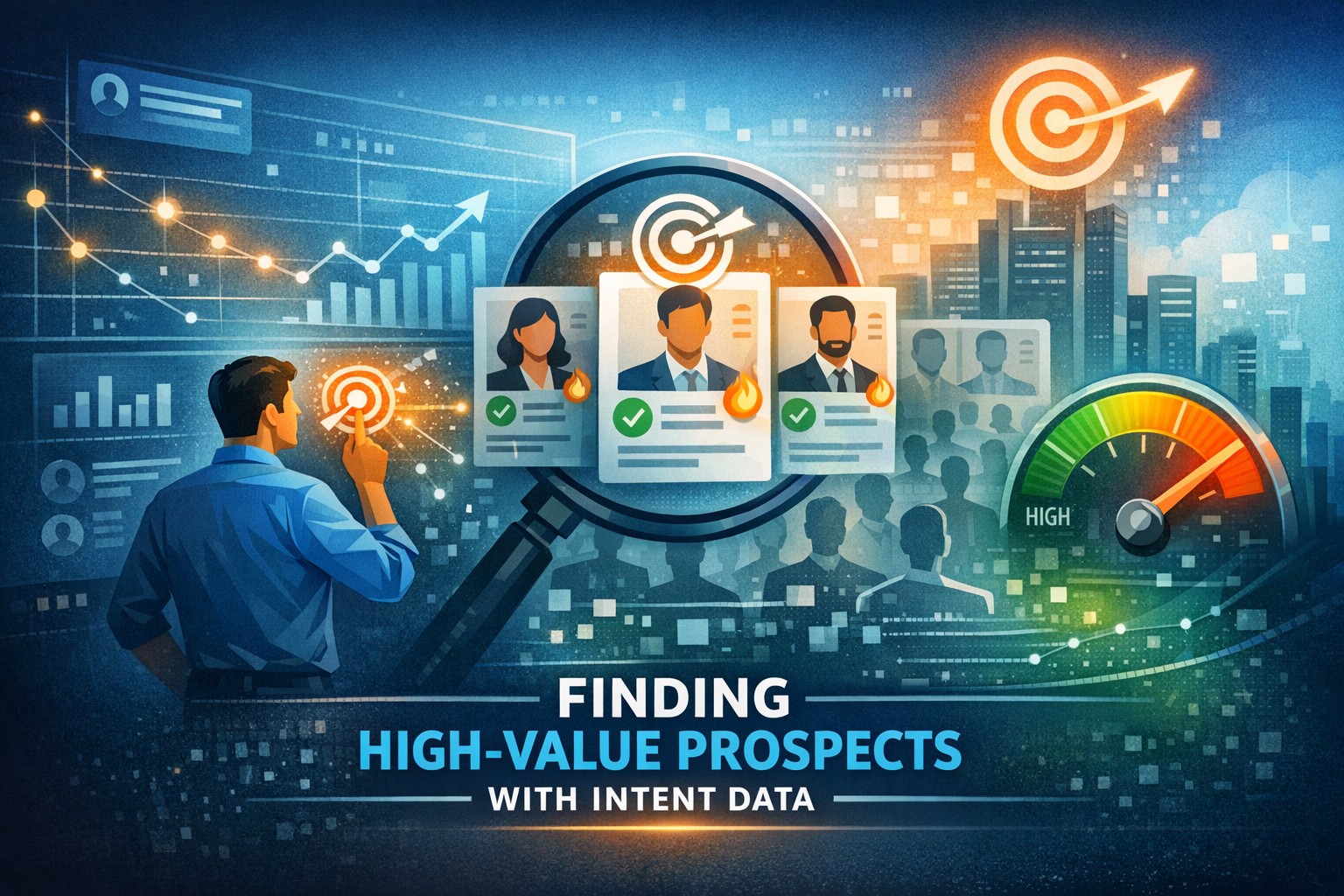
Using Intent Data to Spot High-Value Prospects Faster
Sales teams don’t struggle because they lack prospects—they struggle because they lack signal. In crowded B2B markets, hundreds of accounts may look qualified on paper, but only a small fraction are actually ready to buy. Intent data helps teams cut through that noise and identify high-value prospects faster, before competitors do.
When used correctly, intent data shifts prospecting from guesswork to precision.
What Makes a Prospect “High-Value”?
A high-value prospect isn’t just a large company or a well-known brand. It’s an account that combines three things:
A real business problem your solution addresses
Active interest in solving that problem
The right timing to engage
Traditional firmographic and demographic data only tell you who a prospect is. Intent data tells you what they’re doing right now—and that’s the difference between busywork and pipeline.
How Intent Data Reveals Buying Readiness
Intent data captures behavioral signals that indicate research, evaluation, or purchase consideration. These signals come from actions like:
Consuming content on specific solution topics
Comparing vendors or approaches
Repeated engagement with relevant categories over time
What matters most isn’t a single action—it’s patterns and momentum. A spike in relevant research activity often signals that a buying process has already started, even if the buyer hasn’t filled out a form or contacted sales.
Speed Is the Competitive Advantage
One of the biggest benefits of intent data is speed. Buyers typically research quietly long before they engage vendors directly. By the time a form is filled out, the buyer may already have a shortlist.
Intent data allows sales teams to:
Engage accounts earlier in the buying journey
Reach prospects before competitors are visible
Shape conversations instead of reacting to them
Faster identification means more influence—and higher win rates.
Prioritization That Actually Works
Without intent data, sales prioritization often defaults to account size, territory rules, or gut instinct. Intent data adds a dynamic layer that reflects real demand.
With intent insights, teams can:
Rank accounts by active interest, not static scores
Focus outreach on prospects with rising intent trends
Deprioritize accounts that look good on paper but show no buying signals
This reduces wasted effort and increases productivity per rep.
More Relevant First Conversations
Cold outreach fails when it feels disconnected from buyer reality. Intent data enables warmer, more relevant conversations—without crossing privacy lines.
Instead of generic messaging, reps can:
Align outreach to topics prospects are actively researching
Lead with insights tied to current challenges
Ask smarter discovery questions from the first touch
When prospects feel understood, response rates improve and conversations progress faster.
Shortening Time to Opportunity
High-value prospects don’t need to be convinced that they have a problem—they already know. Intent-driven selling focuses on helping buyers navigate decisions, not educating them from scratch.
This leads to:
Faster qualification
Shorter sales cycles
Fewer stalled opportunities
Sales teams spend less time chasing interest and more time advancing deals.
Aligning Sales and Marketing Around the Same Signals
Intent data is most powerful when sales and marketing operate from a shared view of buyer behavior. Marketing can nurture accounts showing early interest, while sales focuses on those demonstrating stronger purchase signals.
This alignment:
Improves lead quality
Reduces friction between teams
Creates a smoother buyer experience
Everyone works from the same definition of “high-value.”
Using Intent Data Responsibly
Spotting high-value prospects faster doesn’t mean being intrusive. The goal is relevance, not surveillance.
Best practices include:
Using intent data to inform messaging, not expose tracking
Combining intent signals with human judgment
Respecting privacy, compliance, and transparency standards
When handled thoughtfully, intent data enhances trust rather than eroding it.
Measuring Success Beyond Volume
The impact of intent data shows up not in more activity, but in better outcomes. Teams that use intent effectively often see:
Higher conversion rates from outreach to meetings
Improved opportunity quality
Better sales efficiency per rep
The focus shifts from “more leads” to better leads, faster.
Final Thoughts
Intent data changes how sales teams find and engage prospects. By revealing who is actively in-market and what they care about, it enables faster prioritization, more relevant conversations, and stronger pipeline outcomes.
In competitive B2B environments, the advantage doesn’t go to the team that works the hardest—it goes to the team that works the smartest. Intent data is one of the most powerful tools available to do exactly that.
Read More: https://intentamplify.com/blog..../intent-data-identif