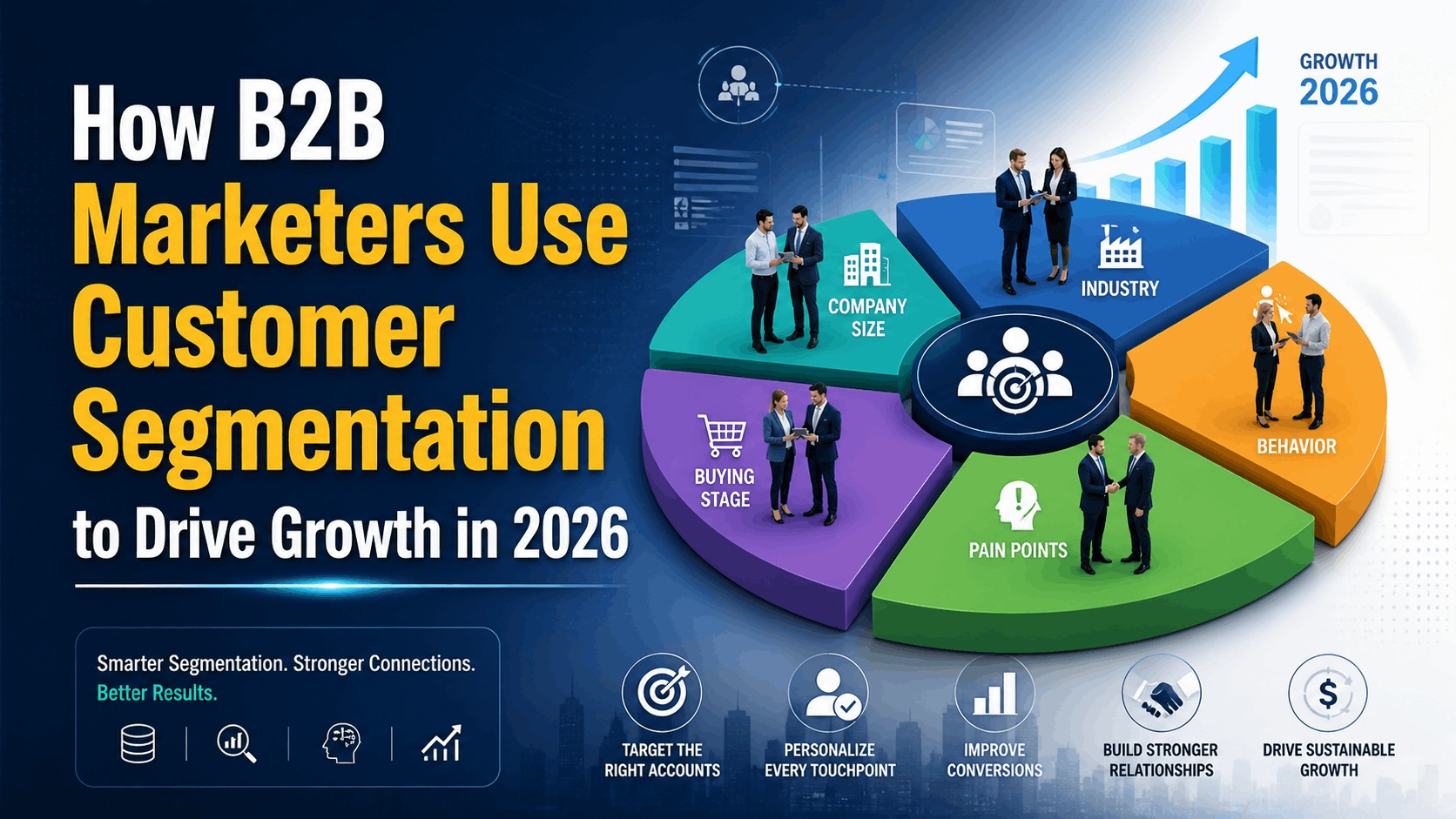
How B2B Marketers Use Customer Segmentation to Drive Growth in 2026
In 2026, B2B marketing is no longer about casting a wide net and hoping for results. Instead, it’s about precision, personalization, and performance. At the center of this transformation lies customer segmentation—a strategy that allows marketers to divide their audience into clearly defined groups based on shared characteristics. With the rise of AI, advanced analytics, and real-time data, segmentation has evolved into a powerful growth engine for B2B organizations.
Today’s buyers expect tailored experiences, relevant messaging, and solutions that directly address their business challenges. Companies that fail to meet these expectations risk losing opportunities to competitors who understand their audience better. This is why customer segmentation has become a cornerstone of modern B2B marketing strategies.
The Evolution of Customer Segmentation in B2B
Traditionally, B2B segmentation relied heavily on firmographics—company size, industry, revenue, and location. While these factors still matter, they are no longer sufficient in a highly competitive and digital-first landscape.
In 2026, segmentation goes deeper. Marketers now combine multiple data layers, including:
• Demographic and firmographic data
• Behavioral insights (website activity, engagement patterns)
• Technographic data (tools and platforms used by companies)
• Intent data (signals indicating buying readiness)
By integrating these data points, B2B marketers gain a 360-degree view of their audience, enabling more accurate targeting and better decision-making.
Why Customer Segmentation Matters More Than Ever
Customer segmentation is not just a marketing tactic—it’s a growth strategy. Here’s why it plays a critical role in 2026:
1. Hyper-Personalization at Scale
Segmentation allows marketers to deliver highly personalized content and messaging to specific audience groups. Instead of generic campaigns, businesses can create targeted experiences that resonate with each segment’s unique needs.
2. Improved Lead Quality and Conversion Rates
By focusing on high-intent segments, marketers can prioritize leads that are more likely to convert. This improves efficiency and reduces wasted resources.
3. Better Alignment Between Sales and Marketing
Segmentation provides a shared framework for sales and marketing teams, ensuring both are targeting the same audience with consistent messaging.
4. Enhanced Customer Retention
Understanding different customer segments helps businesses deliver ongoing value, strengthening relationships and increasing lifetime value.
Key Segmentation Strategies Used by B2B Marketers in 2026
1. Account-Based Segmentation
Account-Based Marketing (ABM) continues to dominate B2B strategies. Instead of targeting broad segments, marketers focus on high-value accounts and tailor campaigns specifically to them.
Segmentation in ABM involves identifying key stakeholders within target accounts and customizing messaging for each role, from decision-makers to influencers.
2. Behavioral Segmentation
Behavioral data has become one of the most valuable assets for marketers. By analyzing how prospects interact with websites, emails, and content, businesses can identify patterns and preferences.
For example, a prospect frequently downloading whitepapers may be in the research phase, while someone requesting a demo is closer to making a purchase decision. This allows marketers to deliver the right message at the right time.
3. Intent-Based Segmentation
Intent data helps marketers understand which companies are actively searching for solutions. By tracking online behavior such as search queries and content consumption, businesses can identify prospects with high buying intent.
This approach enables marketers to focus their efforts on leads that are already in the decision-making process, significantly increasing conversion rates.
4. Lifecycle Segmentation
Not all customers are at the same stage of their journey. Lifecycle segmentation divides audiences based on where they are in the funnel—awareness, consideration, decision, or retention.
Each stage requires a different approach:
• Awareness: Educational content
• Consideration: Product comparisons and case studies
• Decision: Demos and consultations
• Retention: Upselling and customer success initiatives
5. AI-Driven Predictive Segmentation
Artificial Intelligence has taken segmentation to the next level. AI-powered tools can analyze vast amounts of data to identify patterns that humans might miss.
Predictive segmentation uses machine learning to forecast customer behavior, such as which leads are most likely to convert or which customers are at risk of churn. This allows marketers to take proactive actions that drive growth.
How Segmentation Drives Measurable Growth
Customer segmentation directly impacts key business outcomes. Here’s how:
Higher ROI on Marketing Campaigns
Targeted campaigns perform better than generic ones. By focusing on specific segments, businesses can achieve higher engagement and better returns on investment.
Faster Sales Cycles
When prospects receive relevant information tailored to their needs, they move through the sales funnel more quickly.
Stronger Brand Positioning
Segmentation helps businesses position themselves as industry experts by addressing the unique challenges of each audience segment.
Data-Driven Decision Making
With clear insights into customer behavior, marketers can make informed decisions that improve overall strategy.
Challenges B2B Marketers Face
Despite its advantages, segmentation is not without challenges:
• Data Silos: Disconnected systems can make it difficult to create a unified view of customers
• Data Quality Issues: Inaccurate or outdated data can lead to poor segmentation
• Complexity: Managing multiple segments requires advanced tools and expertise
• Privacy Regulations: Compliance with data protection laws is essential
To overcome these challenges, organizations must invest in data integration, governance, and advanced analytics tools.
The Future of Customer Segmentation
Looking ahead, customer segmentation will become even more dynamic and real-time. With advancements in AI and automation, marketers will be able to adjust segments instantly based on changing behaviors and market conditions.
Additionally, privacy-first strategies will shape how data is collected and used, pushing businesses to rely more on first-party data and transparent practices.
Conclusion
In 2026, customer segmentation is no longer optional—it’s essential for B2B growth. By leveraging advanced data, AI-driven insights, and targeted strategies, marketers can deliver personalized experiences that drive engagement, conversions, and long-term relationships.
Businesses that master segmentation will not only stand out in a crowded marketplace but also build stronger connections with their customers. In an era where relevance is everything, understanding your audience is the key to sustainable growth.
Read More