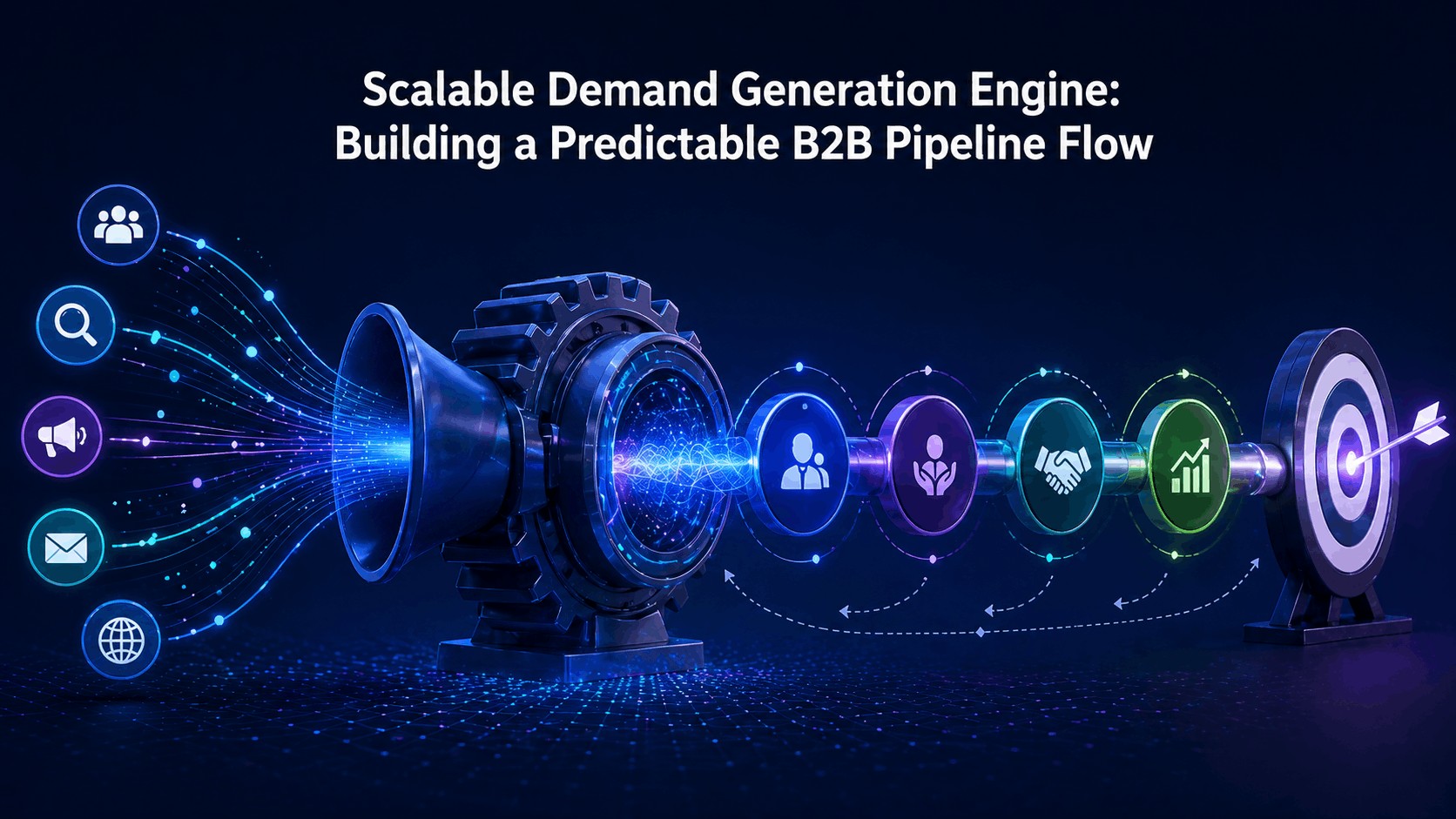
Mastering Demand Generation: Building a Scalable and Predictable B2B Pipeline
In today’s hyper-competitive B2B landscape, generating demand is no longer about filling the top of the funnel with as many leads as possible. It’s about creating a sustainable, scalable, and predictable pipeline that consistently converts interest into revenue. Organizations that master demand generation don’t just grow—they grow with precision.
Demand generation has evolved from isolated marketing campaigns into a holistic revenue engine that aligns marketing, sales, and customer success. The goal is simple: attract the right audience, engage them meaningfully, and convert them into high-value customers through a structured and repeatable process.
Understanding Modern Demand Generation
Traditional lead generation focused on quantity—capturing emails, gating content, and pushing prospects through rigid funnels. However, modern buyers are more informed, independent, and selective. They research extensively before engaging with sales, often forming strong preferences early in their journey.
This shift demands a new approach: demand generation that prioritizes quality, intent, and experience over volume.
Modern demand generation includes:
• Building brand awareness and trust
• Creating and capturing demand simultaneously
• Nurturing prospects across multiple touchpoints
• Leveraging data and insights to guide decisions
It’s not just about generating leads—it’s about creating demand that converts.
The Foundation of a Scalable Demand Generation Strategy
To build a scalable and predictable pipeline, organizations must focus on three foundational pillars:
1. Deep Audience Understanding
Effective demand generation starts with knowing your audience inside out. This goes beyond basic demographics and firmographics. It involves understanding:
• Pain points and business challenges
• Buying triggers and intent signals
• Decision-making structures within organizations
Creating detailed buyer personas and mapping buying committees ensures messaging resonates with every stakeholder involved.
2. Content That Drives Intent
Content is the fuel of demand generation. But not all content is created equal. High-performing demand strategies focus on value-driven, problem-solving content rather than promotional messaging.
Examples include:
• Thought leadership articles
• Case studies and success stories
• Industry insights and research reports
• Webinars and interactive content
The goal is to educate, not just sell—positioning your brand as a trusted advisor.
3. Multi-Channel Orchestration
B2B buyers interact across multiple channels—email, social media, search engines, websites, and events. A scalable demand generation strategy ensures a consistent and cohesive experience across all touchpoints.
This includes:
• Paid media campaigns for awareness
• Organic content for engagement
• Email nurturing for conversion
• Sales outreach for personalization
The key is orchestration—ensuring every channel works together rather than in isolation.
Building a Predictable Pipeline
Predictability in pipeline generation comes from process, measurement, and continuous optimization.
1. Aligning Marketing and Sales
One of the biggest challenges in demand generation is misalignment between marketing and sales. To build a predictable pipeline:
• Define clear lead qualification criteria (MQLs, SQLs)
• Establish shared KPIs and revenue goals
• Create feedback loops for continuous improvement
When marketing and sales operate as a unified revenue team, pipeline quality improves significantly.
2. Leveraging Data and Analytics
Data is the backbone of predictable demand generation. Organizations must track:
• Conversion rates across funnel stages
• Channel performance and ROI
• Engagement metrics and intent signals
Advanced analytics help identify what’s working, what’s not, and where to optimize for better results.
3. Implementing Marketing Automation
Scalability requires automation. Marketing automation platforms enable:
• Lead nurturing workflows
• Behavioral tracking and segmentation
• Personalized communication at scale
Automation ensures that no opportunity is missed while maintaining efficiency and consistency.
The Role of Intent Data and AI
Modern demand generation is increasingly powered by intent data and artificial intelligence. These technologies enable organizations to move from reactive to proactive engagement.
Intent Data
Intent data reveals which accounts are actively researching solutions like yours. This allows teams to:
• Prioritize high-intent prospects
• Tailor messaging based on buyer behavior
• Engage at the right time with the right content
AI-Driven Insights
AI enhances demand generation by:
• Predicting lead quality and conversion likelihood
• Recommending next-best actions
• Optimizing campaign performance in real time
Together, intent data and AI create a smarter, faster, and more efficient demand engine.
Common Challenges in Demand Generation
Despite its importance, demand generation comes with its own set of challenges:
• Balancing quantity vs. quality of leads
• Measuring ROI accurately across channels
• Breaking down silos between teams
• Scaling personalization without losing relevance
Addressing these challenges requires a combination of strategy, technology, and organizational alignment.
Best Practices for Long-Term Success
To truly master demand generation, organizations should adopt these best practices:
• Focus on customer experience, not just campaigns
• Invest in data quality and integration
• Continuously test and optimize strategies
• Build strong alignment between marketing, sales, and customer success
• Prioritize long-term brand building alongside short-term pipeline goals
Demand generation is not a one-time effort—it’s an ongoing process of learning and refinement.
The Future of Demand Generation
The future of demand generation lies in hyper-personalization, real-time engagement, and AI-driven automation. As technology evolves, organizations will be able to deliver highly tailored experiences at scale, making pipeline generation more efficient and predictable than ever before.
We are moving toward a world where demand generation is not just a marketing function but a core business capability that drives revenue growth across the entire customer lifecycle.
Conclusion
Mastering demand generation is about more than generating leads—it’s about building a repeatable system for revenue growth. By focusing on audience insights, content quality, multi-channel orchestration, and data-driven optimization, organizations can create a pipeline that is both scalable and predictable.
In a competitive B2B environment, those who invest in modern demand generation strategies will not only fill their pipelines but also convert them into sustainable business success.
Read More: https://intentamplify.com/blog..../all-you-need-to-kno