Understanding IT Leads and How They Differ from Telecom and Networking Leads
In the modern digital economy, businesses rely heavily on technology to operate efficiently, communicate effectively, and scale their services. As a result, companies offering technology solutions actively seek potential customers through what are known as leads. Among the most common categories are IT leads, telecom leads, and networking leads. While they are often grouped together within the broader technology sector, each type of lead represents different customer needs and business opportunities.
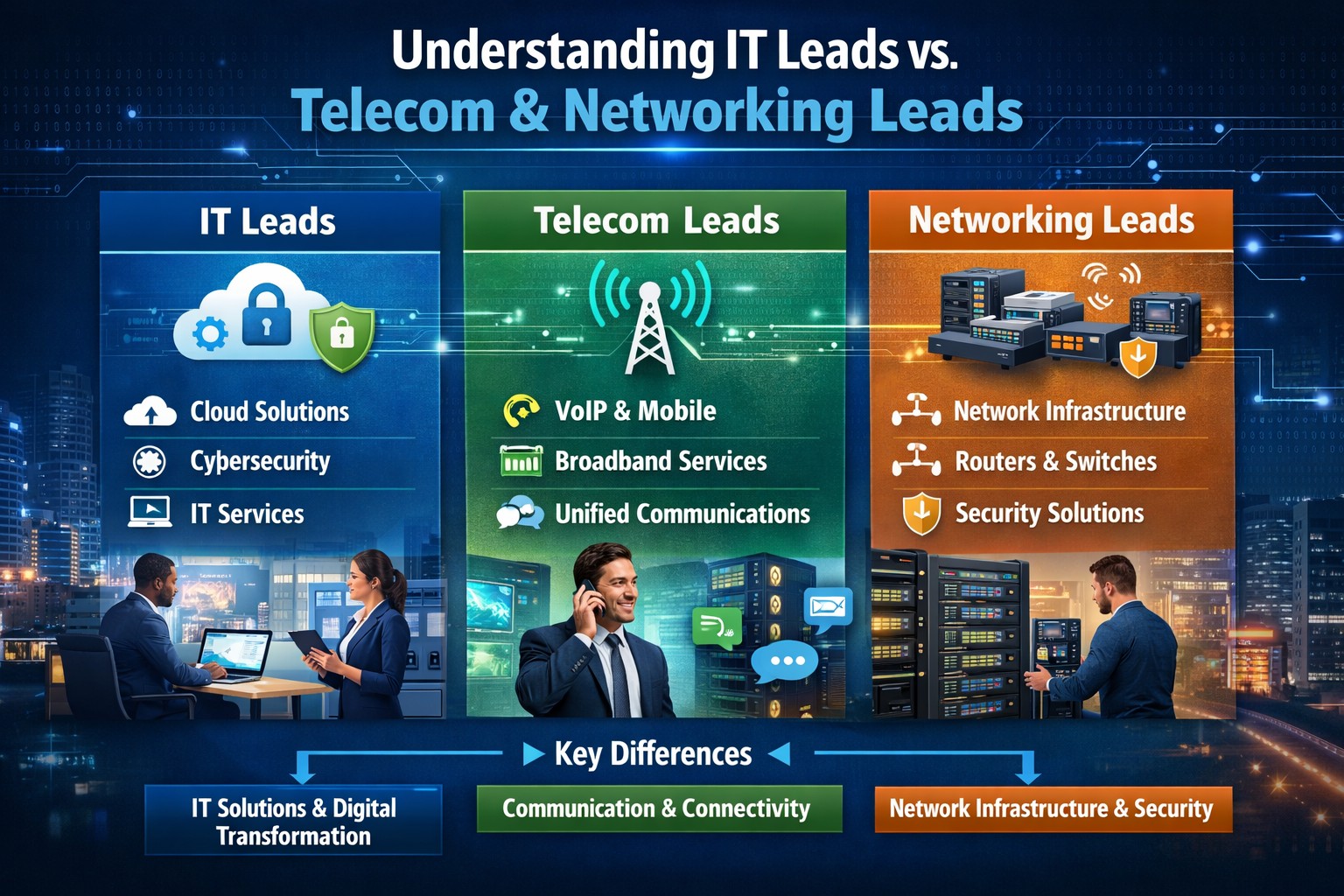
IT leads refer to potential customers interested in information technology products or services. These leads may be businesses or individuals seeking solutions such as cloud computing, software development, cybersecurity, IT consulting, data management, or managed IT services. For example, a company looking to migrate its operations to the cloud or improve its cybersecurity infrastructure would qualify as an IT lead. These leads are typically focused on improving digital workflows, automating processes, and enhancing overall business efficiency through technology.
In contrast, telecom leads are associated with telecommunications services. These leads involve customers interested in services such as mobile connectivity, broadband internet, VoIP systems, unified communications, or enterprise phone systems. Telecom leads often emerge from organizations seeking better communication infrastructure or more reliable connectivity. For instance, a growing company may need a scalable phone system or high-speed internet services to support its operations.
Networking leads, while related to IT, focus specifically on network infrastructure. These leads are generated by customers looking for solutions related to routers, switches, firewalls, network monitoring, or enterprise network setup and optimization. Networking leads typically involve organizations that want to build, upgrade, or secure their internal networks to ensure stable and efficient data communication.
The key difference between these lead types lies in the scope of technology needs. IT leads are broader and encompass overall technology solutions and digital transformation initiatives. Telecom leads concentrate primarily on communication services and connectivity, while networking leads focus on the design, management, and security of network infrastructure.
Understanding these distinctions is important for technology providers and marketers. By identifying whether a prospect is an IT, telecom, or networking lead, companies can tailor their outreach strategies, messaging, and solutions to better address specific customer requirements, ultimately increasing the chances of successful conversions and long-term partnerships.
Read More: https://intentamplify.com/blog..../what-are-it-leads-d